

Make my easy homemade pasta recipe with only 4 ingredients in 1 hour. Learn step by step how to make homemade Fettuccine, Linguine, or Spaghetti noodles. Use any tools… Make pasta by hand, a pasta machine, a KitchenAid mixer, or in a food processor with this guide. Let’s mangia!
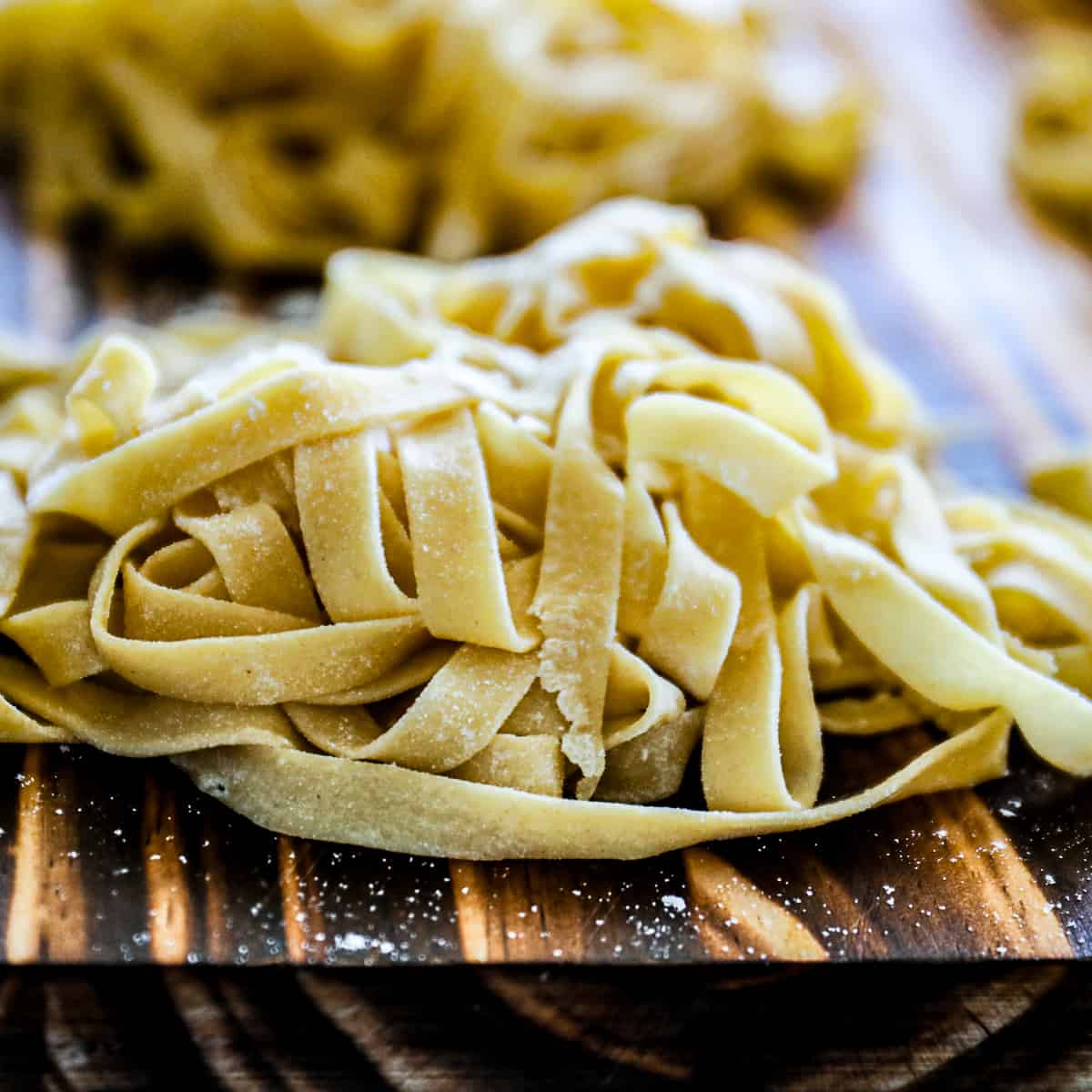
Why it’s the best homemade pasta tutorial
- Takes just 1 hour to make pasta from scratch.
- Only 4 ingredients.
- Easy step by step instructions. For real.
Options and tools you can use
Beyond being a delicious pasta recipe, you don’t need fancy equipment. All of these pasta making options are available to you with this tutorial:
- No machine? No problem. Make pasta by hand with a rolling pin and knife.
- Use a traditional pasta making machine like the Mercato Atlas 150 pasta maker.
- Use a Kitchenaid stand mixer, then cut it with the pasta cutter attachment.
- Make pasta dough in a food processor and finish it by hand or manual pasta machine.
Ingredients for making fresh pasta
Four simple ingredients make this easy pasta recipe.
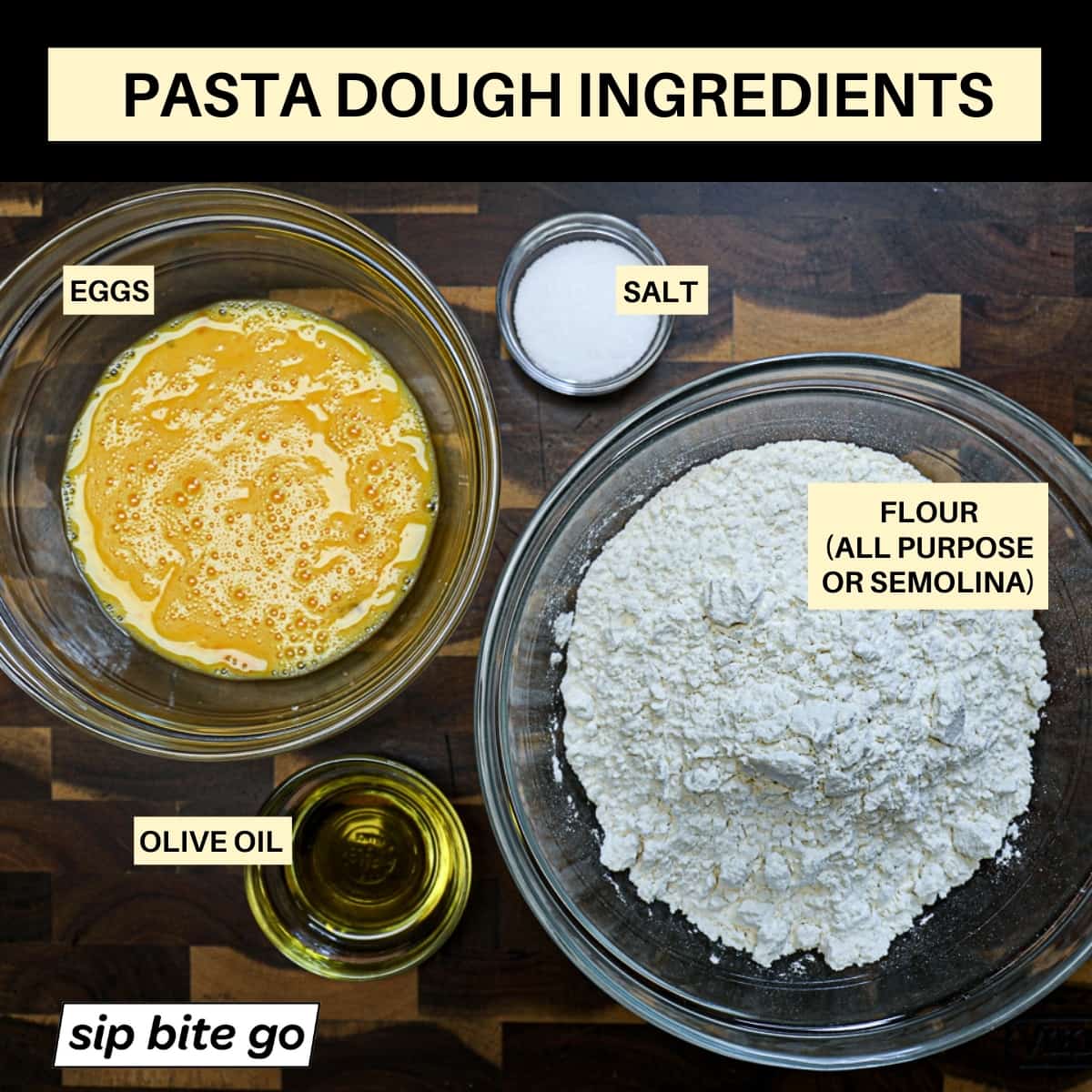
- Eggs – see recipe FAQ to make more egg flavored noodles by using more yolks
- Flour – all purpose flour or semolina flour
- Olive oil
- Salt – regular salt, or freshly ground kosher salt or sea salt
How to make pasta dough by hand
So now, I’ll walk you through how to make handmade pasta dough.
Want to use a machine to make the dough? Find directions for making pasta in the food processor and with a KitchenAid mixer in the recipe instructions at the bottom of this post.
Step 1. Set up pasta dough ingredients. Pour flour on a dry work surface like a butcher’s block. Make a small well in the center of the flour (like a mini crater), making sure there is still a little flour at the lowest part. Add whisked eggs to the flour well, along with the olive oil and salt.
Step 2. Mix together pasta dough. Use a fork to gently fold in the flour from the outside of the well into the center, gently whisking the mixture as you go.
It might get a bit wet and messy for a moment, that’s no problem, just guide the liquid back into the pasta dough mixture until all ingredients are combined.
Step 3. Knead pasta dough with hands. Once the mixture has all ingredients incorporated and you can hold the dough in your hands, it’s time to knead it.
To do this, fold each corner of the dough to the center with your fingers and once it’s in the center, use the heel of your hand to push the dough into a ball. Continue turning the dough and kneading new corner pieces into the center for about 10 minutes, until the gluten binds and the pasta dough becomes smooth.
Prepare for rolling pasta dough into sheets
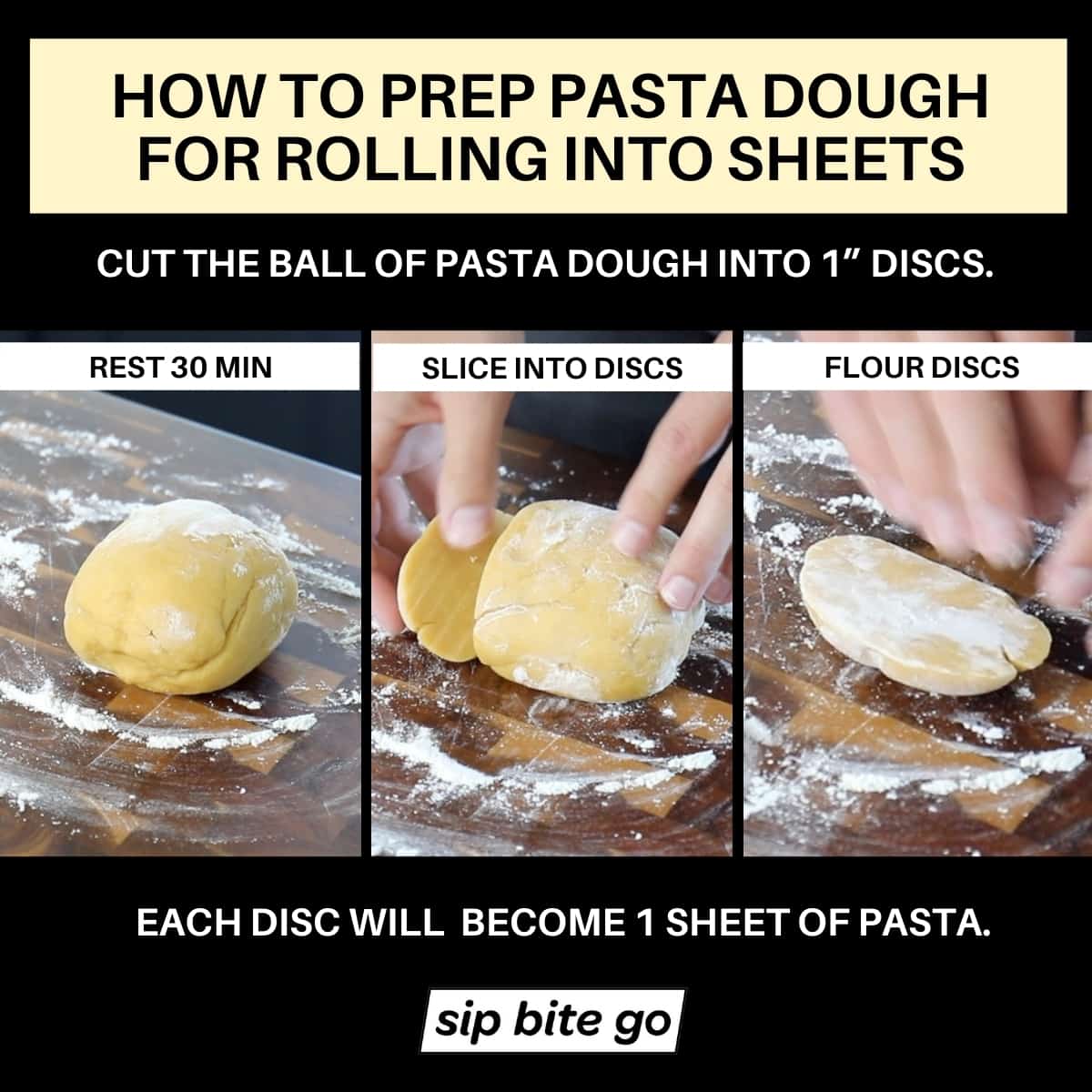
In this series of quick steps, you’ll let the pasta dough set and then cut it into discs (which will later form the sheets).
Step 1. Allow pasta dough to set. Wrap the ball of pasta dough tightly with plastic wrap. Store dough in the fridge for at least 30 minutes to set, up to overnight. This step helps the dough dry out a little so it’s easier to roll and cut into pasta shapes.
Step 2. Prepare dough for cutting pasta. When it’s time to make pasta, unwrap the ball of refrigerated dough and dust it with flour. Cut the ball of pasta dough into 1” discs. Each disc will become a sheet of pasta. Each sheet of pasta will become a handful of noodles.
How to make pasta with a pasta machine
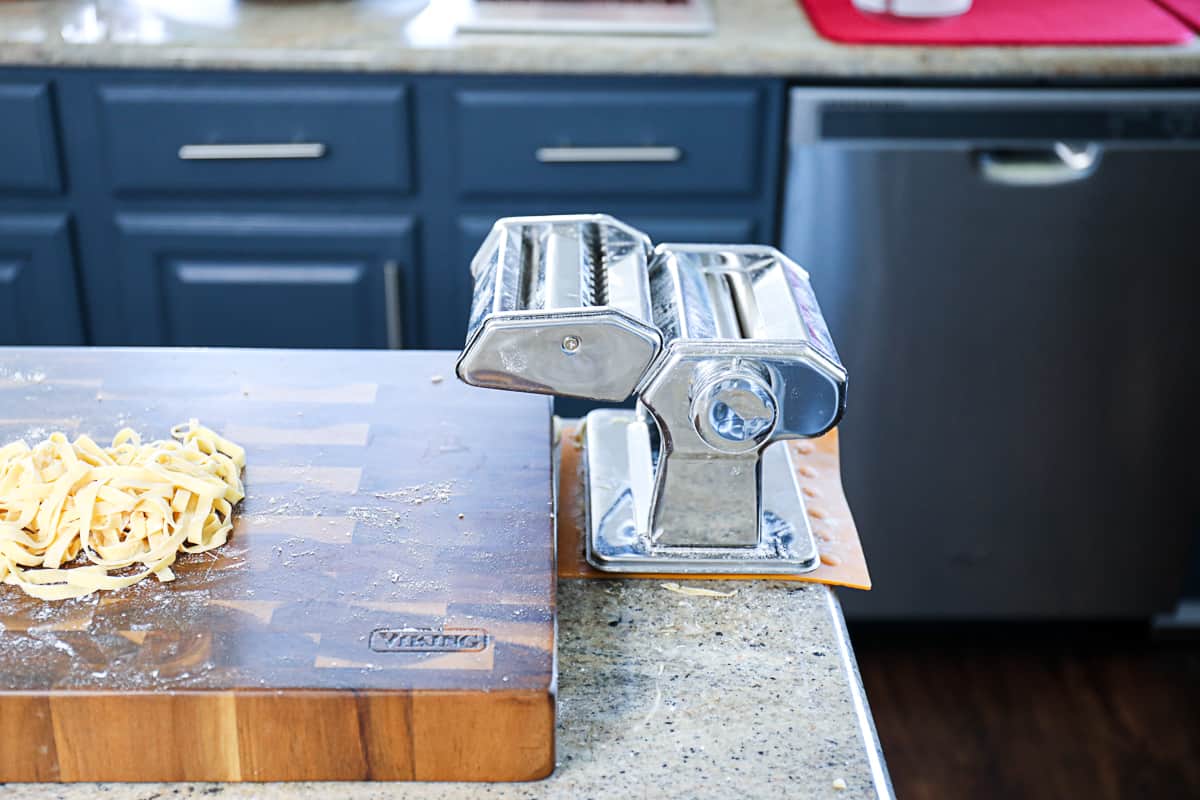
Now, let’s make pasta sheets and cut pasta dough into fettuccine (or spaghetti or whatever pasta shape you’re making).
Want to use equipment instead of making pasta sheets with a pasta machine? Find directions for making pasta sheets with a KitchenAid pasta roller and pasta cutter attachment in the recipe instructions at the bottom of this post.
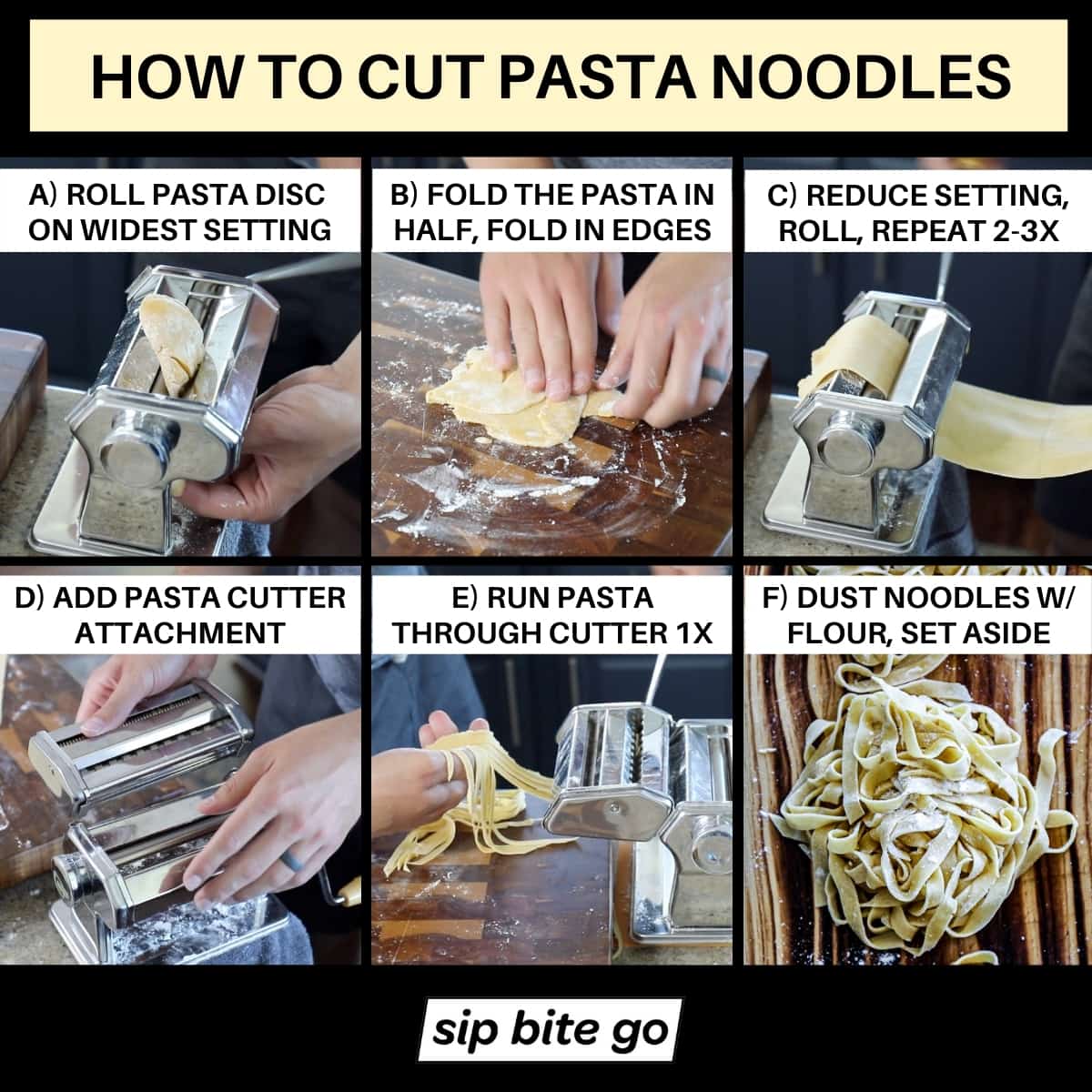
Step 1. Make the pasta sheets. Lightly dust a disc of pasta with flour. Lightly dust the pasta roller machine with flour. Set the machine to the widest setting (photo A), and pass the disc through 2-3 times.
To make “neat edges” (photo B) you can fold the pasta in half, and/or fold the edges into the pasta every couple of passes through the machine. Reduce the setting down 1-2 notches and pass the pasta sheet through another 2-3 times (photo C).
Continue this process, adding a dusting of flour to the machine and going down 1-2 sizes each time, until desired thickness of the pasta is reached. In the Sip Bite Go demonstration video, the pasta was passed through the machine until it became paper thin, which was about setting 2 or 3 on the machine.
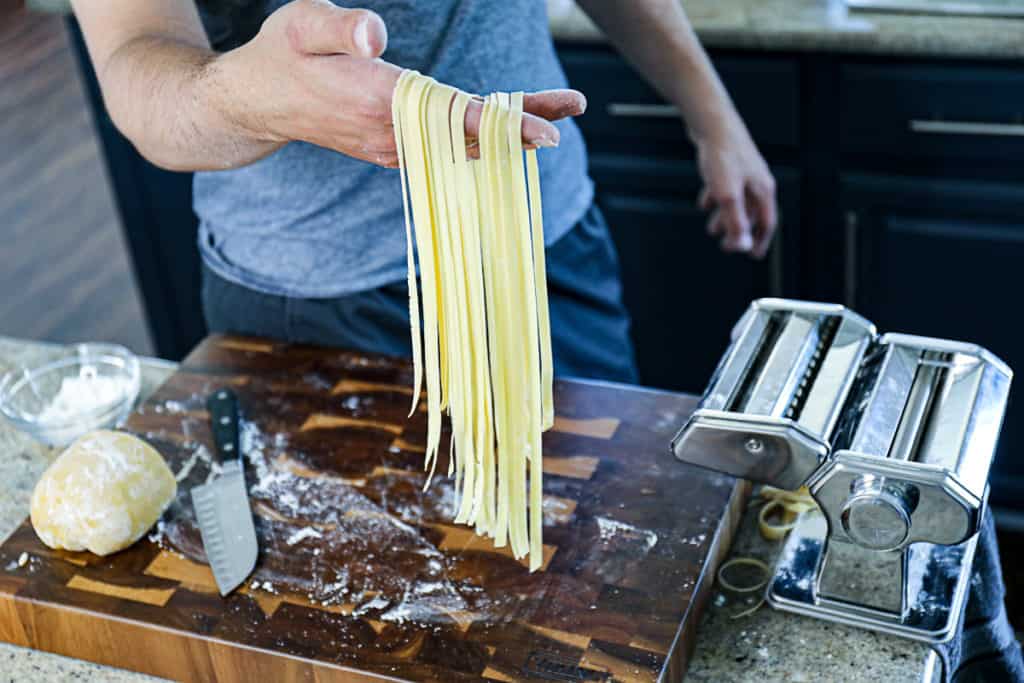
Step 2. Cut the noodles. Add pasta cutter attachment to the machine (photo D). Lightly flour the pasta cutter attachment and the sheet of pasta. Set the pasta cutter to the desired width to form your desired noodle shape. Pass the pasta sheet through the cutting machine (photo E).
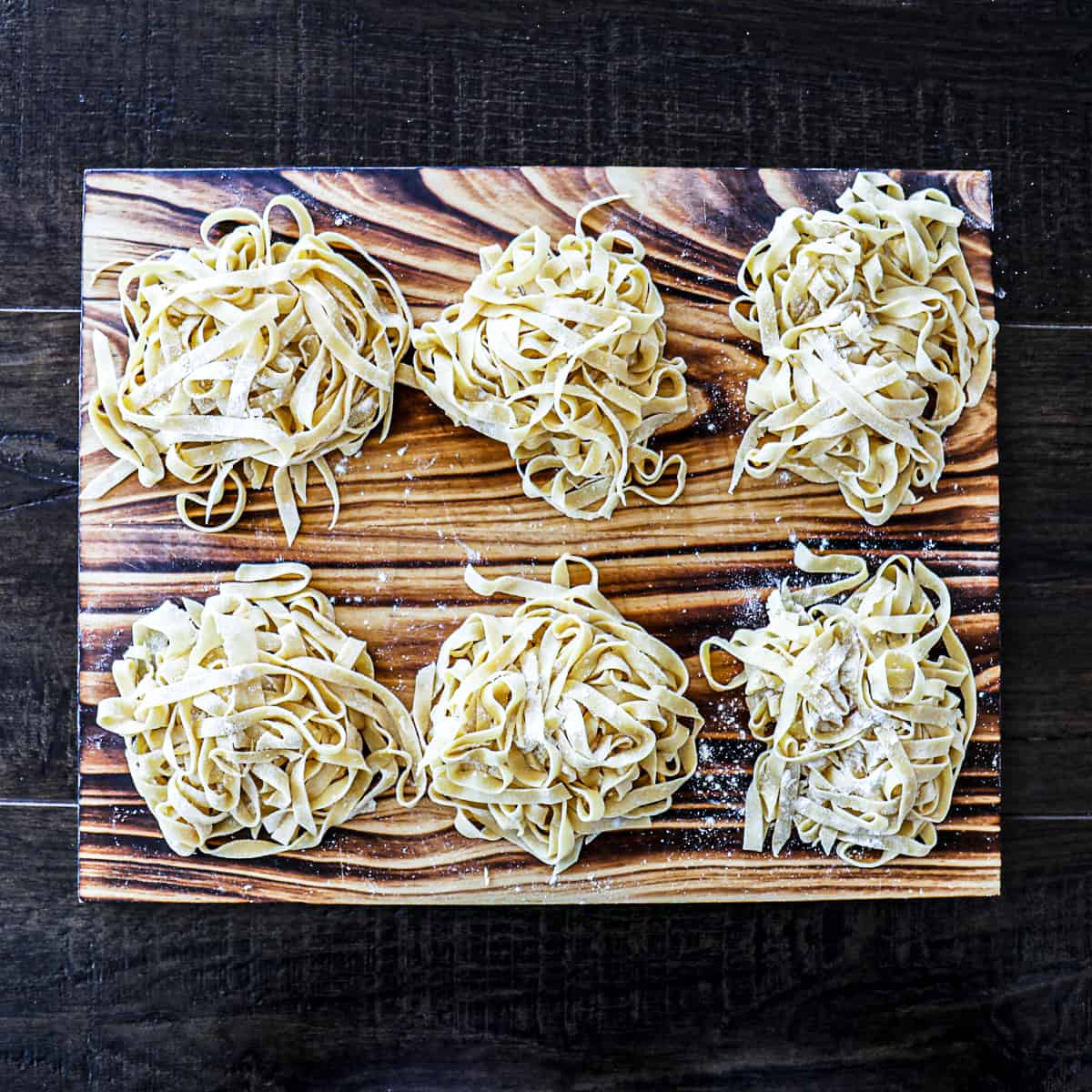
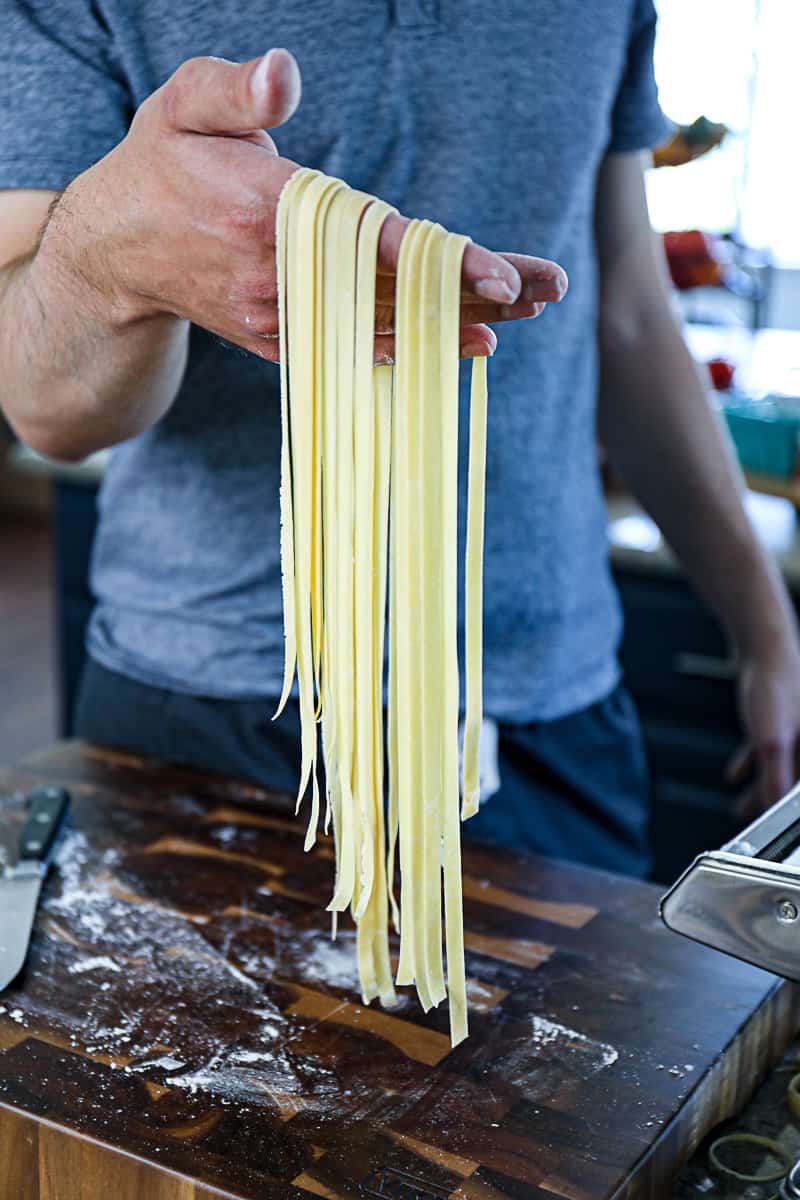
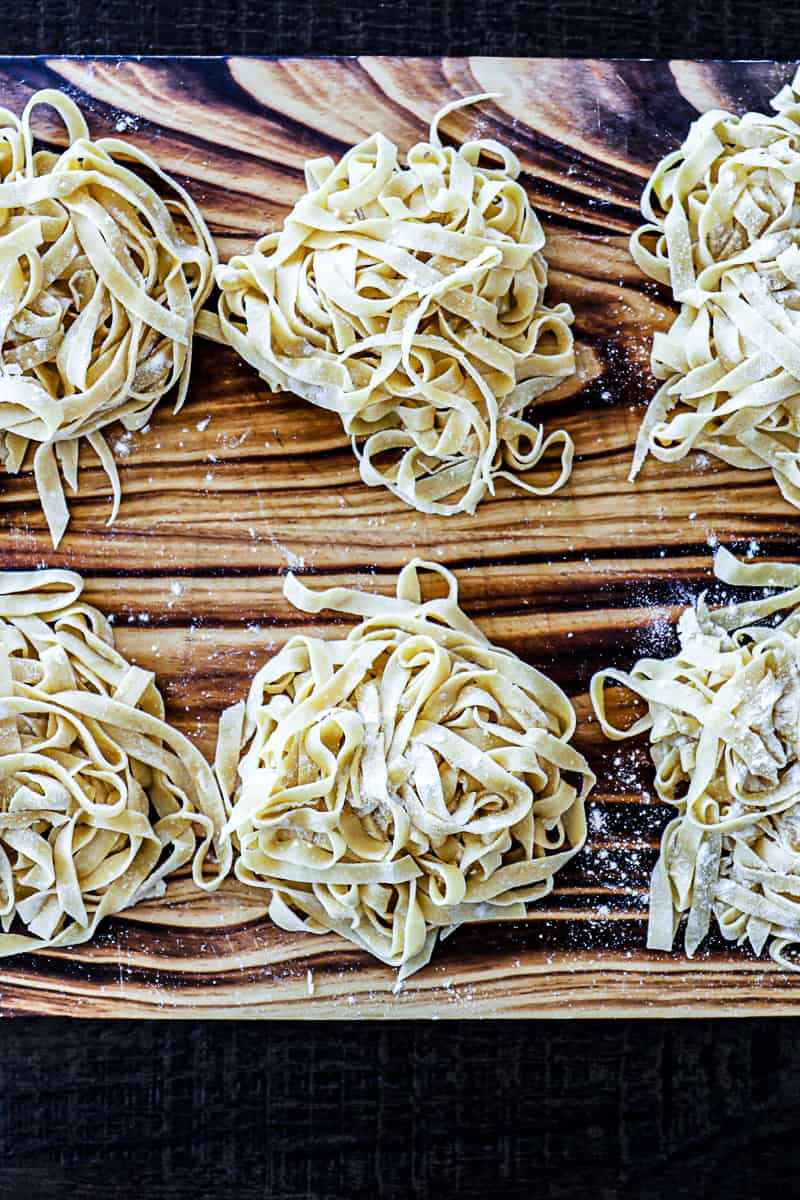
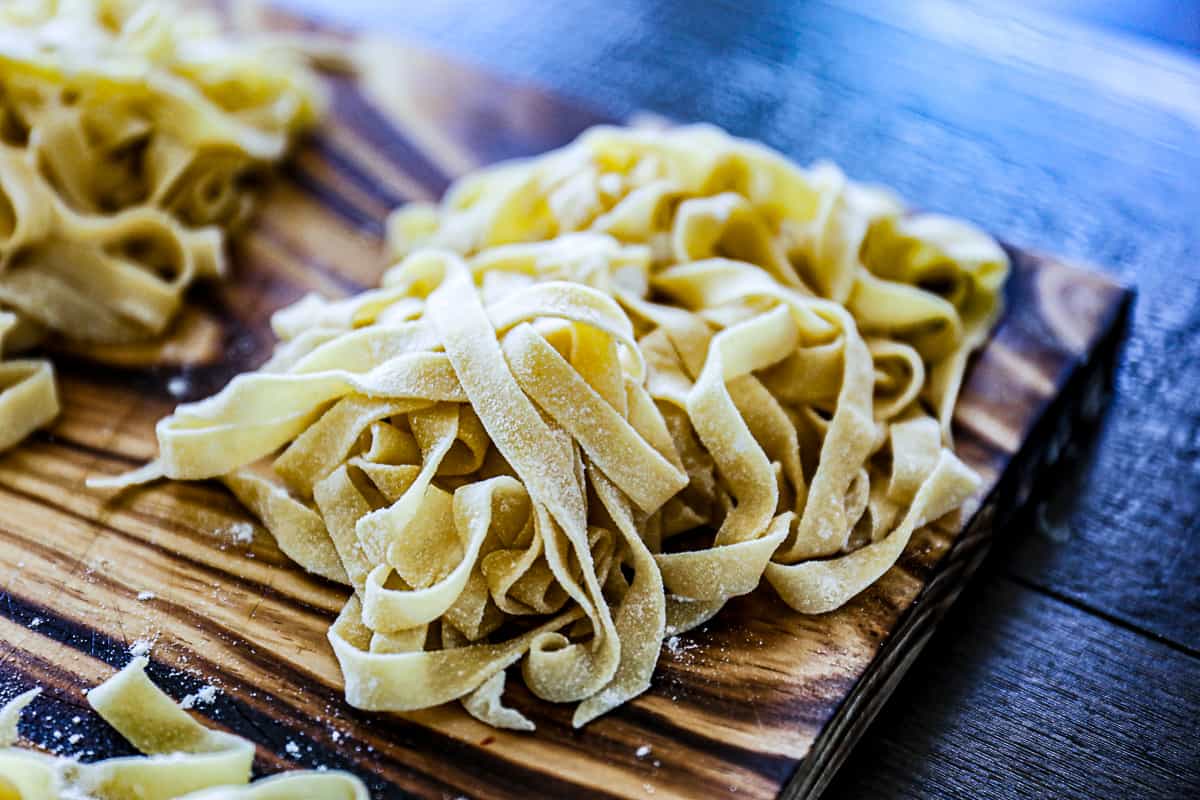
Lightly dust cut pasta ribbons with flour and set on a drying rack or in piles or “nests” on a cutting board (photo F).
Repeat until all pasta discs have become noodles.
How to cut pasta noodles by hand
You’ll have perfect lasagna noodle sheets if you keep the pasta sheets in tact after rolling the dough. Take it a step further to make perfectly shaped noodles for Fettuccine, Linguine, Spaghetti.
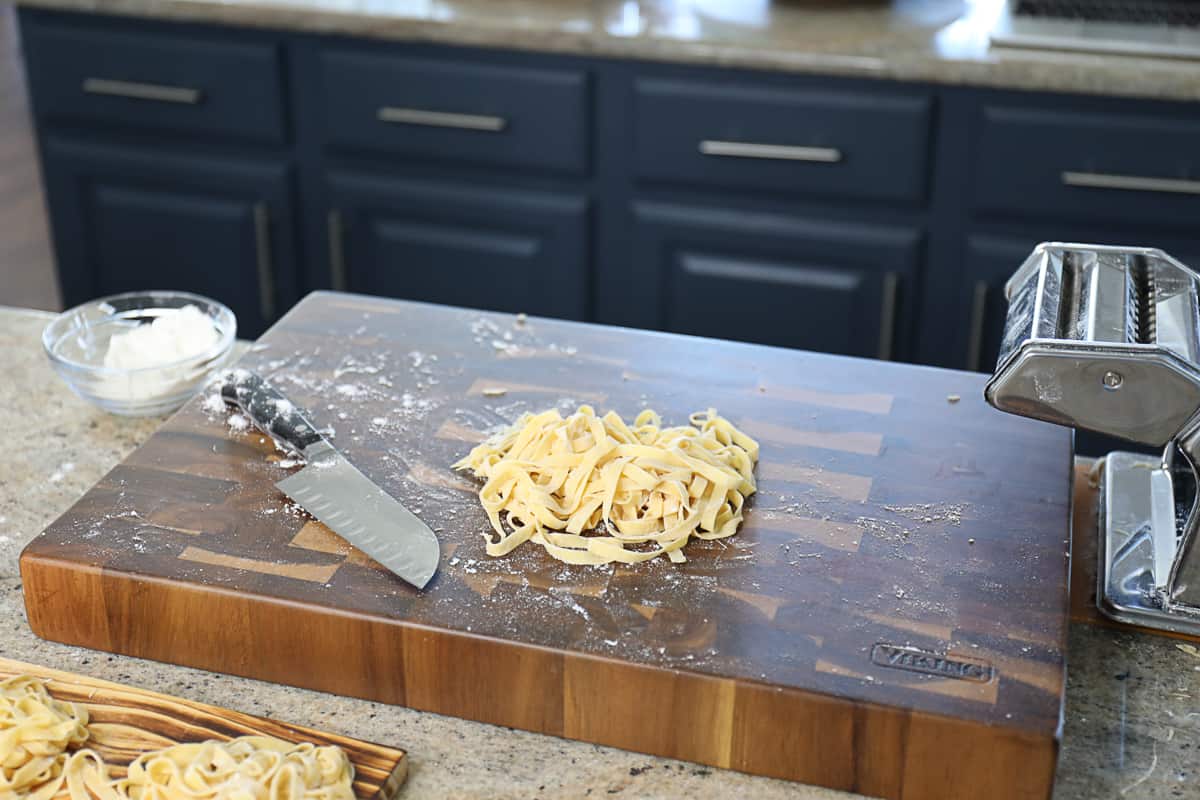
To cut ribbon shaped pasta by hand, roll up each pasta sheet and use a sharp chef’s knife to slice strings of pasta noodles into specific shapes. Different widths yield different pasta shapes.
How to cook fresh pasta
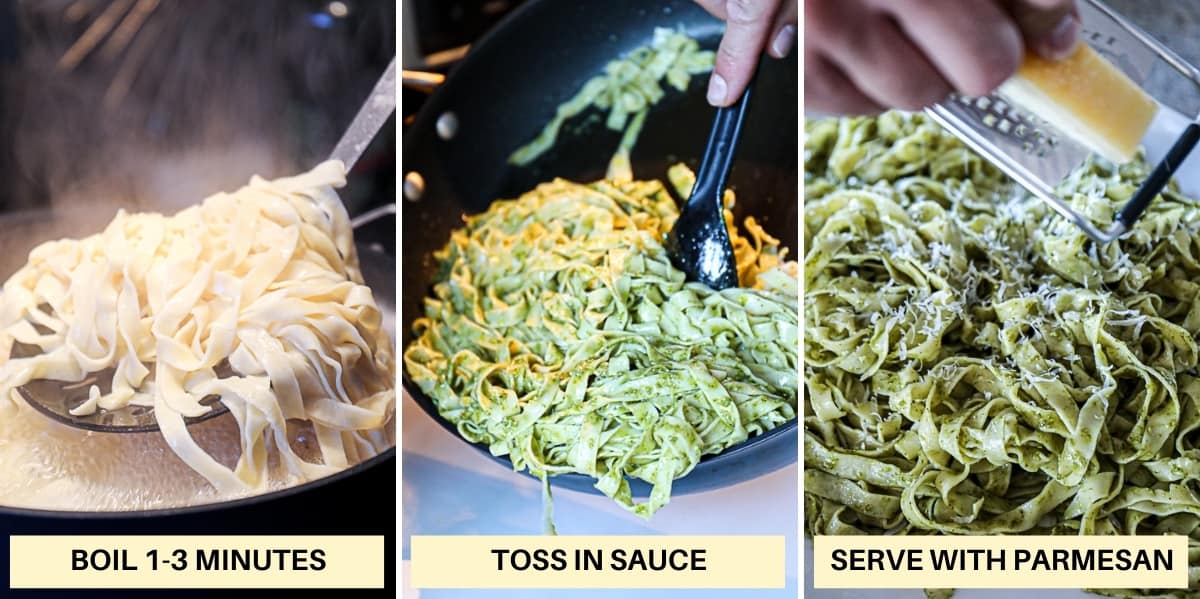
Step 1. Bring a large pot of water to a boil. Instead of adding salt to pasta water when it’s cold, wait until the water is boiling. Add 1 ½ tablespoon of table salt for every pound of pasta. Let the water return to a boil, then add the homemade pasta.
Step 2. Fresh pasta cooks very quickly. Cook homemade pasta in salted boiling water until cooked throughout (1-3 minutes depending on thickness).
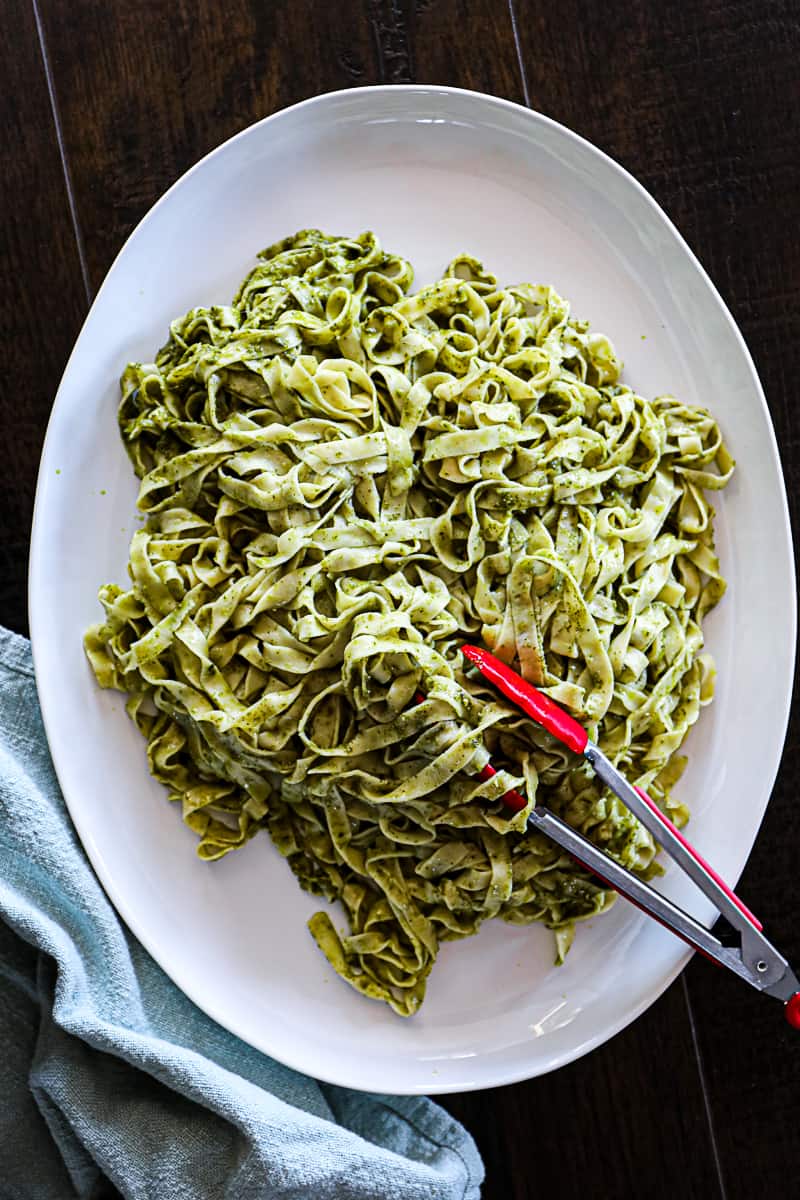
Step 3. Coat pasta in sauce if desired and plate.
Width size settings for cutting pasta with a machine
Here are some common thickness settings for popular pasta noodles. Below you’ll find the millimeter width for pasta of common shapes, the Kitchenaid Pasta Roller Attachment settings, and the hand crank pasta machine settings for the Mercato Atlas 150 pasta maker.
- Angel hair pasta – (1 mm) Kitchenaid pasta setting 6 | hand crank setting 3
- Spaghetti noodles – (2 mm) Kitchenaid pasta setting 6 | hand crank setting 3
- Linguine noodles – (4 mm) Kitchenaid pasta setting 5 | hand crank setting 4
- Standard egg noodles – (4 mm) Kitchenaid setting 5 | hand crank setting 4
- Fettuccine noodles – (6 mm) Kitchenaid pasta setting 4 | hand crank setting 5
- Tagliatelle pasta – (8 mm) Kitchenaid pasta setting 3 | hand crank setting 6
- Pappardelle pasta – (12 mm) Kitchenaid pasta setting 2 | hand crank setting 7
Note: Sizes may vary slightly when pasta is cooked.
Choosing a flour for homemade pasta recipes
Semolina flour for pasta from scratch (aka durum flour)
Is semolina flour the best ingredient for homemade pasta? Most people would say yes. It’s known for having a little bit of protein and the qualities of the flour help it retain pasta shapes easily.
Semolina (or durum flour as it’s sometimes called) is known for having a “bite” to it, which helps when going for al dente homemade pasta. (more on cooking handmade pasta to al dente in the FAQ notes)
All purpose flour for pasta
As soon as I hit publish on this recipe, I expect an email asking “can you make pasta with plain flour”. So here’s the answer: YES!
You can substitute all purpose flour for semolina flour in this recipe. All purpose flour isn’t as light and airy as semolina, but it’s close enough to make freakin’ delicious pasta from scratch.
When we did a taste test of semolina pasta vs flour pasta, the results were nearly impossible to decipher. The most noticeable difference is that all purpose flour has a bit more “chew” and semolina flour results in more of a clean “bite”.
00 flour – what’s the difference?
When it comes to semolina vs 00 flour vs all purpose flour… don’t be confused. 00 flour isn’t it’s own type of pasta flour – it’s actually a specification referring to how finely the flour has been milled. So any of these flours can have “00” on the package, meaning they have been milled very fine.
Bread flour in pasta
It’s a no brainer to use bread flour for homemade pizza dough, but it can be used in pasta dough, too. Using Italian bread flour or American bread flour will result in a firmer pasta – which isn’t necessarily needed for fettuccine, linguine, or spaghetti.
Bread flour is great for penne, baked rigatoni, farfalle, jumbo stuffed shells, and other baked pasta dishes you don’t want to turn mushy.
Almond flour for pasta
When using almond flour to make pasta, you want to use blanched almond flour. This is not to be confused with almond meal, which will make pasta the texture of thick sandpaper.
Keep in mind that you can’t just substitute almond flour for all purpose or semolina or 00 flour. So using this homemade pasta recipe isn’t a direct swap out for gluten free pasta. You’ll need to modify the recipe with Tapioca starch so it has more of a chew and traditional pasta noodle consistency.
Check out this recipe for keto lasagna which uses almond flour pasta sheets. Serve it with these tasty gluten free beef meatballs with cauliflower rice.
FAQs for making pasta at home
Yes, although I highly recommend using a manual pasta machine if you don’t have a stand mixer. When making pasta by hand with a rolling pin, you’ll have to continue rolling out a chunk of pasta dough at a time until it is paper thin. Like when using a machine, fold the pasta sheets in half a few times as you roll them out to knead the dough and make strong pasta.
If you want to go all out with authentic Italian inspired flour, try Caputo Pasta Flour or Anna TIPO “00” Flour. Otherwise, any semolina or duram flour will work. As will all purpose flour.
Here’s the thing. Using store bought pasta that is dried and then cooked (basically rehydrated) results in a more al dente texture. Homemade pasta is soft and delicate and has a lighter, more chewy quality to it. It also melts in your mouth a bit differently than dried pasta. So the short of it is that from scratch pasta recipes don’t become al dente.
You can add in other ingredients to the pasta dough like a sprinkle of garlic powder, fresh or dried herbs, etc. Or, you can make pasta taste more like egg noodles by playing with the ratio of egg yolks to egg whites.
To do this, swap out the volume of egg whites for yolks so the same overall volume of egg is in the pasta dough. This will make pasta more yellow in color as well.
Use freshly ground sea salt or kosher salt. If you don’t have either, substitute with iodized salt. Tip: if you’re as obsessed with garlic as I am, try swapping out some of the salt for garlic salt.
Use 1 ½ tablespoon of table salt for every pound of pasta. Instead of adding salt to pasta water when it’s cold, wait until the water is boiling. Add the salt. Let the water return to a boil, then add the homemade pasta.
If your pasta machine is not cutting pasta dough properly, take a step back to assess the situation. First, make sure you give pasta time to breathe after mixing the dough. Wait at least 30 minutes before cutting pasta with a machine.
If the pasta dough is too wet when it’s time to cut it, and adding flour doesn’t help it pass through the pasta machine, then you may want to let the dough set longer or overnight in the fridge to dry out a bit.
Popular KitchenAid recipe tools
Shop my go-to KitchenAid mixer equipment and accessories…
- KitchenAid Stand Mixer (Premium 5 Quart Tilt-Head)
- Glass Bowl (KitchenAid)
- Ice Cream Maker Attachment (KitchenAid)
- Pasta Roller & Cutter Attachment 3 Piece Kit (KitchenAid)
- Food Grinder Attachment (KitchenAid)
- Slicer/Shredder Attachment (KitchenAid)
- Dicing Food Processor Attachment (KitchenAid)
- Shave Ice Attachment (KitchenAid)
- Spiralizer Attachment (KitchenAid)
See my video on the most popular KitchenAid attachments…
Reader favorite Sip Bite Go recipes
- Tri tip
- Smoked chicken breast
- Brisket
- Sirloin steak
- Pizza sauce recipe
- Baked chicken wings
- Hamburger recipe
- Air fry chicken breast
- Blackstone recipes
- Traeger recipes
See my favorite glass stove top cleaner…
New recipes and foodie guides….
- Tri tip (it’s so good!)
- Chicken enchiladas with homemade enchilada sauce
- Homemade pizza
- Smoked wings
- Traeger pizza
- Pan grilled chicken
- Bacon wrapped hot dogs
- Potato side dishes
- Pasta side dishes
- Baked brisket
- Sous vide frozen steak
- Cooked chicken temp guide
- Jalapeno ranch sauce
- Sous vide pork chops
- Coulotte steak
- GUIDE: How to make hamburger patties
- GUIDE: Aerogarden
- Best restaurants in Portland
- Blackstone griddle recipes
Grill and smoker recipes…
- Grilled chicken wings
- Smoked pizza
- Smoked chicken
- Smoked tri tip
- Traeger pulled pork
- Grilled shrimp
- Smoked turkey breast
- Smoked chicken wings
- Smoked ham
- Flank steak marinade
- Skirt steak marinade
- Smoked mac and cheese
- Smoked chicken breast
- Grilled broccoli
- Smoked queso
Meat thermometer recommendations
Every home chef needs a reliable meat thermometer to cook food perfectly.
On Sip Bite Go, you’ll often see me using:
- Meater thermometer – a fancy wireless thermometer that connects to a phone app – gifted to me from a Traeger partnership.
- ThermoPro digital thermometer – which has a wire that connects the thermometer to a display box outside the oven/grill.
It’s like being psychic! The great thing about either of the thermometers above is that I don’t have to take the food out of the oven to know the temperature.
How to use ‘em… What I do is stick the digital thermometer in steak, pork, chicken, whatever before cooking them.
While the meat cooks, it reads the temperature so I know exactly what temp meat is as it’s cooking. Without having to take it out and check. It’s really difficult to overcook food when you know exactly what temp it is inside!
Are you a foodie, too?
I want to know what you think and see photos of your food! Maybe you’ll use your fresh pasta to whip up something like this angel hair pasta with chicken. Find me on Instagram @sipbitego to tag me and connect.
Learn to make restaurant-style food at home here on Sip Bite Go and with in-depth video guides on the Sip Bite Go channel.
Special thanks to Italian Chef Hubs, pasta maker and hand model extraordinaire for demonstrating step by step how to make pasta in this guide.
Homemade Pasta Recipe (Fettuccine, Linguine, Spaghetti) | Sip Bite Go
Ingredients
For fresh homemade pasta dough
- 3 eggs whisked
- 2 cups flour all purpose flour or semolina flour
- 1 tbsp olive oil
- 1 tbsp salt freshly ground kosher salt or sea salt
- 1-2 tbsp flour for rolling dough
For cooking fresh handmade pasta
- Water
- 1 ½ tbsp salt
Instructions
(Making the dough option 1) Make pasta dough by hand
- Set up pasta dough ingredients. Pour flour on a dry work surface like a butcher's block. Make a small well in the center of the flour (like a mini crater), making sure there is still a little flour at the lowest part. Add whisked eggs to the flour well, along with the olive oil and salt.
- Mix together pasta dough. Use a fork to gently fold in the flour from the outside of the well into the center, gently whisking the mixture as you go. It might get a bit wet and messy for a moment, that’s no problem, just guide the liquid back into the pasta dough mixture until all ingredients are combined.
- Knead pasta dough with hands. Once the mixture has all ingredients incorporated and you can hold the dough in your hands, it’s time to knead it. To do this, fold each corner of the dough to the center with your fingers and once it’s in the center, use the heel of your hand to push the dough into a ball. Continue turning the dough and kneading new corner pieces into the center for about 10 minutes, until the gluten binds and the pasta dough becomes smooth.
(Making the dough option 2) Make pasta dough in a food processor
- Set up the food processor for making pasta dough. Use the plastic blade attachment and large food processor bowl.
- Mix together pasta dough ingredients. Add all pasta dough ingredients to the food processor and pulse for 10-15 seconds until ingredients loosely combine and no wet liquids remain. Dough will be a shaggy texture. If dough begins to form a ball, it’s time to stop pulsing and move on to the next step.
- Knead dough with hands. Dust a large cutting board with flour. Remove the shaggy pasta dough from the food processor and make a ball of pasta dough. Knead pasta dough for about 5-10 minutes by folding each corner of the dough to the center. Push the heel of your hand into the center ball of dough with each fold. Continue turning the dough and kneading new corner pieces into the center until the gluten binds and the pasta dough becomes smooth.
(Making the dough option 3) Make pasta dough in a stand mixer
- Set up the stand mixer for making pasta dough. Use the fitted dough hook.
- Mix together pasta dough ingredients and knead dough with the machine. Add all pasta dough ingredients to the mixer and knead for about 10 minutes. The dough will form a ball and is ready when the texture changes from shaggy to smooth, the gluten binds, and the pasta dough becomes smooth.
Set pasta and prepare it for cutting
- Allow pasta dough to set. Wrap the ball of pasta dough tightly with plastic wrap. Store dough in the fridge for at least 30 minutes to set, up to overnight. This step helps the dough dry out a little so it’s easier to roll and cut into pasta shapes.
- Prepare dough for cutting pasta. When it’s time to make pasta, unwrap the ball of refrigerated dough and dust it with flour. Cut the ball of pasta dough into 1” discs. Each disc will become a sheet of pasta. Each sheet of pasta will become a handful of noodles.
(Cutting pasta option 1) Cut pasta by hand with a knife (without a machine)
- Make the pasta sheets. Dust a large cutting board with flour. Take one disc of raw pasta dough and roll it out until you reach desired level of thickness, or until about paper thin. During the dough flattening process, fold the pasta sheets in half a few times as you roll them out to flatten the dough and make strong pasta. In the Sip Bite Go demonstration, the pasta sheet was about paper thin – almost thin enough to see through it.
- Cut the noodles. Roll the pasta sheet or fold it over a few times (without pressing it together) and use a sharp chef’s knife to slice strings of pasta noodles into specific shapes. Different widths yield different pasta shapes. See information below for width dimensions. Lightly dust cut pasta ribbons with flour and set on a drying rack or in piles or “nests” on a cutting board.
- Repeat until all pasta discs have become noodles.
(Cutting pasta option 2) Cut pasta with a hand crank pasta machine
- Make the pasta sheets. Lightly dust a disc of pasta with flour. Lightly dust the pasta roller machine with flour. Set the machine to the widest setting, and pass the disc through 2-3 times. To make “neat edges” you can fold the pasta in half, and/or fold the edges into the pasta every couple of passes through the machine. Reduce the setting down 1-2 notches and pass the pasta sheet through another 2-3 times. Continue this process, adding a dusting of flour to the machine and going down 1-2 sizes each time, until desired thickness of the pasta is reached. In the Sip Bite Go demonstration, the pasta was passed through the machine until it became paper thin, which was about setting 2 or 3 on the machine.
- Cut the noodles. Add pasta cutter attachment to the machine. Lightly flour the pasta cutter attachment and the sheet of pasta. Set the pasta cutter to the desired width to form your desired noodle shape. Pass the pasta sheet through the cutting machine. Lightly dust cut pasta ribbons with flour and set on a drying rack or in piles or “nests” on a cutting board.
- Repeat until all pasta discs have become noodles.
(Cutting pasta option 3) Cut pasta with KitchenAid Pasta Cutter Attachment
- Make the pasta sheets. Attach the pasta roller attachment to the stand mixer and set the knob to 1. Lightly dust a disc of pasta with flour. Set stand mixer to speed 2 and feed dough through flattening machine. Fold dough in half, dust pasta dough with flour, and feed dough through the machine 1 more time. Increase the roller setting to 2, and feed through the pasta sheet again. Increase to setting 3, lightly dust pasta with flour, and pass it through the machine again. Repeat increasing the roller setting to make the pasta sheet as thin as desired. In the Sip Bite Go demonstration, the pasta sheet was about paper thin – almost thin enough to see through it.
- Cut the noodles. Remove the pasta roller attachment and set up the pasta cutter attachment for your desired noodle shape. Lightly flour the sheet of pasta. Feed the sheet of pasta through the pasta cutter. Lightly dust cut pasta ribbons with flour and set on a drying rack or in piles or “nests” on a cutting board.
- Repeat until all pasta discs have become noodles.
Cook fresh handmade pasta
- Bring a large pot of water to a boil. Instead of adding salt to pasta water when it’s cold, wait until the water is boiling. Add 1 ½ tablespoon of table salt for every pound of pasta. Let the water return to a boil, then add the homemade pasta.
- Fresh pasta cooks very quickly. Cook homemade pasta in salted boiling water until cooked throughout (1-3 minutes depending on thickness).
- Coat pasta in sauce if desired and plate.
Video
Notes
- If you have issues with your pasta sticking together after cutting, dust with flour and toss to coat all the pieces. Alternatively, hang pasta on a kitchenaid pasta drying rack or a DIY version.
- Angel hair pasta – (1 mm) Kitchenaid pasta setting 6 | hand crank setting 3
- Spaghetti noodles – (2 mm) Kitchenaid pasta setting 6 | hand crank setting 3
- Linguine noodles – (4 mm) Kitchenaid pasta setting 5 | hand crank setting 4
- Standard egg noodles – (4 mm) Kitchenaid setting 5 | hand crank setting 4
- Fettuccine noodles – (6 mm) Kitchenaid pasta setting 4 | hand crank setting 5
- Tagliatelle pasta – (8 mm) Kitchenaid pasta setting 3 | hand crank setting 6
- Pappardelle pasta – (12 mm) Kitchenaid pasta setting 2 | hand crank setting 7
- Lightly dust each set of cut pasta ribbons with flour. Set cut pasta on a drying rack or in piles or “nests” on a cutting board.
- Store cut but uncooked pasta in the refrigerator overnight.
- Freeze pasta in “nests” and cook from frozen if storing pasta for a longer period of time.

Cathy says
The noodles turned out great
John says
I added another egg. This recipe makes great pasta dough.
Denise says
This was an awesome experience…thank you! Cannot believe it was actual pasta after cooking!😆 Airfryed grilled chicken, sliced and put on top. One chg: I made the sauce separately…melted 8 tbs butter, added cheese then the pasta water when time was up. Then transferred pasta from pot to the sauce pot. Mixed etc until creamy. THANK YOU!!!
Sondra T says
Amazing thank you
Rob says
Made it. Very good.
Rachel Lesperance says
Making now with my new KitchenAid!